Better fit.Better follow-through.Better care.
We transform brief post-session reflections into actionable insights.
For patients and clinicians who want better alignment, faster.
Alignment fromthe start
The right match means shared goals, clear expectations, and fewer false starts.
Creating stronger therapeutic relationships for everyone involved.
Momentum beyond the session
Structured reflections turn each session into clear signals and next steps.
Keeping both sides aligned and engaged between visits without added friction.
Care that improves over time
Continuous insight enables more personalized, responsive care.
Improving outcomes, satisfaction, and retention for patients and clinicians alike.
Closing the Gap Between SeekingCare and Seeing Progress
Great providers are out there.
We remove the friction, misalignment, and inefficiency that keep patients and therapists from doing their best work.
Learn More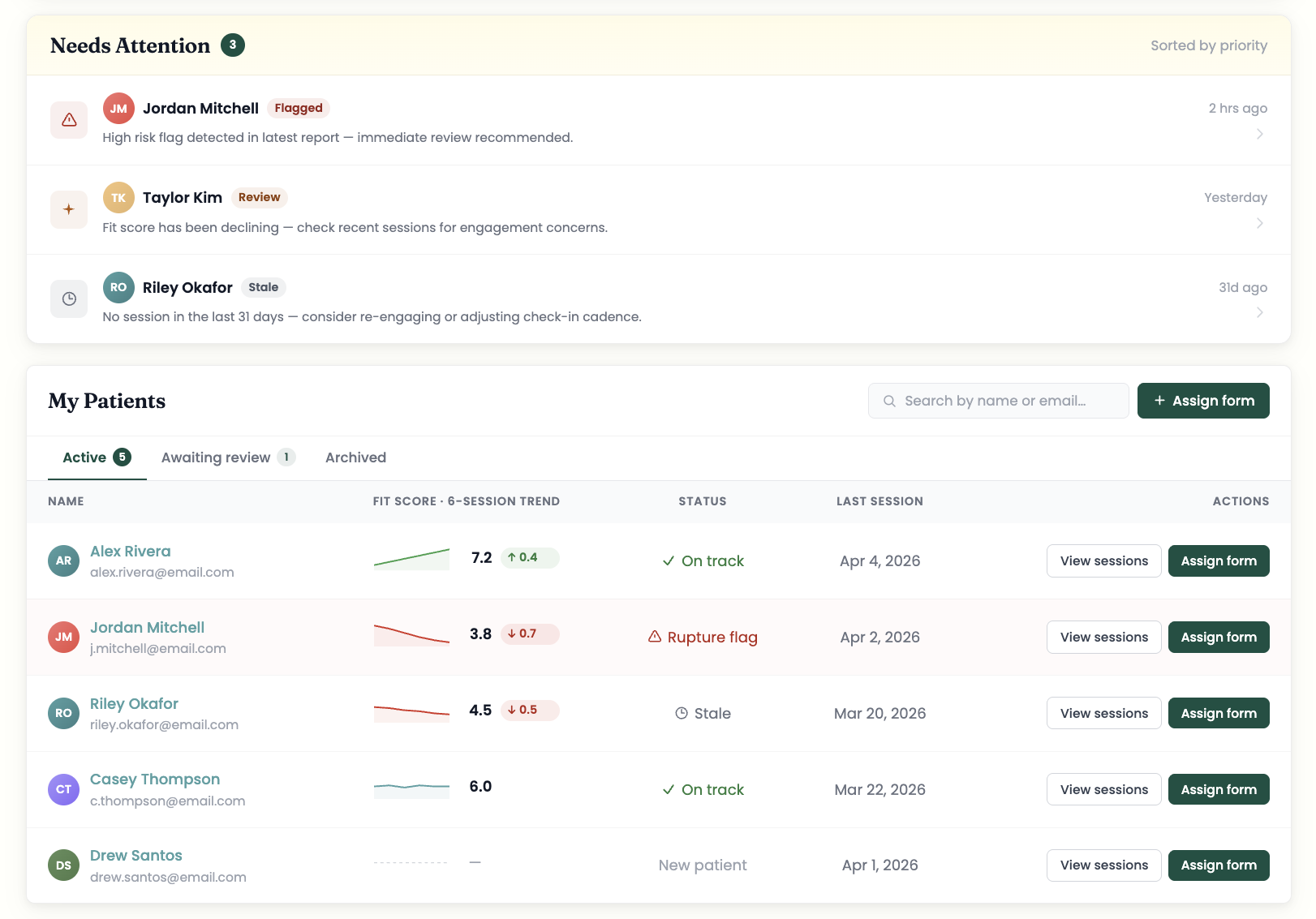
Because care shouldn't end when the session does.
Almost 50% of clients never return to treatment after their initial intake session
82% of those with a mental health condition say they are unhappy with mental health treatment
40%-60% of psychotherapy clients drop out of treatment without processing it with their therapist and meeting their goals
It starts with one step.
Get StartedSimple reflections,
meaningful progress.
Discover how brief post-session reflections help clarify your goals, strengthen alignment with your provider, and keep your care moving forward.
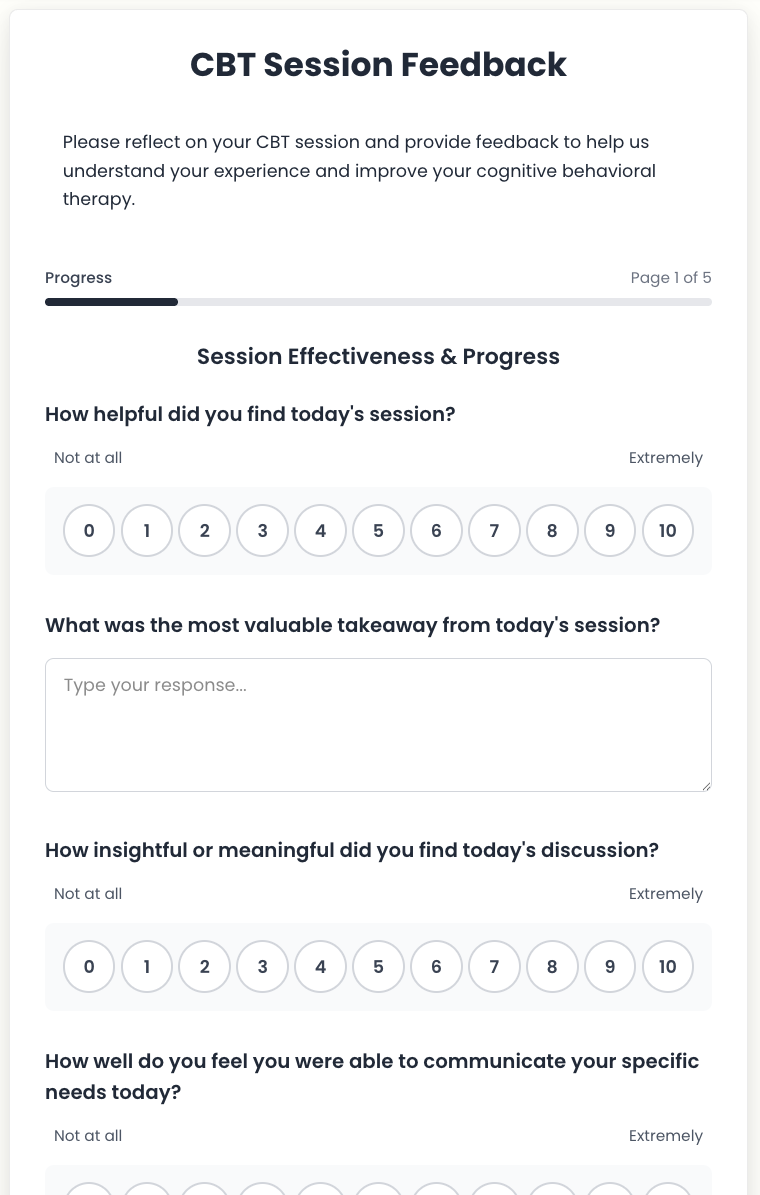
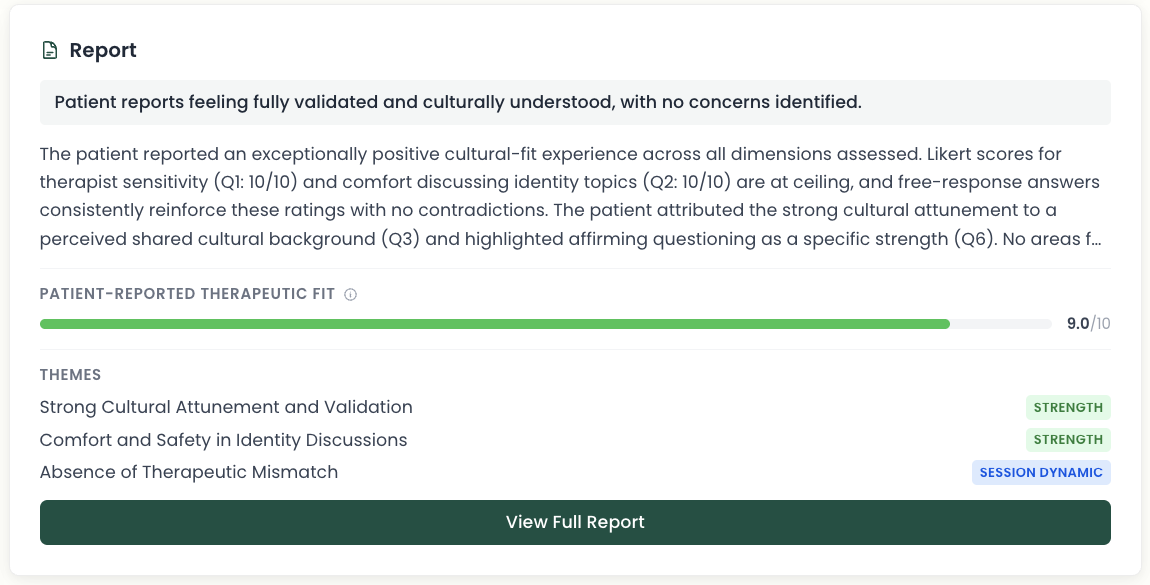
Insights that deepen every session.
See how brief, structured reflections surface meaningful insights, reduce misfit and drop-off, and support better continuity of care — without adding to your workload.
Discover how small insights lead to meaningful care improvements.
Learn how Justinus supports better therapeutic fit and follow-through by turning small moments of feedback into meaningful guidance for care.
Book a DemoBuilt on privacy, practical insight, and measurable progress

Privacy First
HIPAA compliant. End-to-end encryption. You control your data.
AI-Powered Insights
Transform reflections into actionable next steps for better alignment.

Track Progress
Visualize your journey and celebrate milestones over time.
Frequently Asked Questions
No. Justinus is not a substitute for therapy. It is a tool that strengthens the therapeutic relationship by creating a continuous, structured feedback loop between sessions.
No. Justinus does not diagnose, prescribe, or make clinical decisions. AI is used only to structure and summarize feedback into readable insights for providers. Clinical judgment always remains with licensed professionals.
Justinus operates as a B2B SaaS platform. Providers, group practices, and clinics subscribe to the system. Patients do not pay separately to use the feedback forms.
Justinus is built for licensed mental health professionals, including therapists, psychologists, psychiatrists, and group practices seeking to improve alignment and patient retention.
Justinus is built with HIPAA-aligned infrastructure and strict data protection practices. We prioritize security, privacy, and responsible AI use. Patients maintain agency over their data. If a patient or provider chooses to leave the platform, data can be deleted in accordance with our policies. We do not sell patient data.
Traditional satisfaction surveys are often generic, infrequent, and disconnected from clinical care. Justinus is designed specifically for therapeutic alignment. Our forms are session-based, structured for clinical relevance, and translated into actionable summaries, and not just raw scores.
Most patients complete the reflection in under 3 minutes. The questions are intentionally minimal while still capturing meaningful insight about alignment, clarity, and progress.
No. Justinus does not record sessions, transcribe conversations, or analyze live therapy interactions. We only process the structured reflections that patients voluntarily submit after sessions.
AI within Justinus is limited to summarizing structured reflections into readable insights. It does not diagnose, predict risk, or override clinical judgment. We intentionally constrain AI use to reduce bias, prevent overreach, and minimize unnecessary compute usage.
Have more unanswered questions?
Get Started